Sete Orthopedic Implants
The question “Are orthopedic implants permanent” sounds simple, but the clinical answer is rarely absolute. Modern hip and knee implants can function for decades. However, they may wear, loosen, fracture, or require revision surgery. Bone quality, body weight, activity, infection risk, surgical technique, and implant design all influence durability.
The American Joint Replacement Registry’s latest annual reporting shows millions of hip and knee procedures tracked across participating hospitals. This expanding dataset helps surgeons compare implant survivorship, patient age, and revision patterns. AAOS projections also indicate that primary knee and hip replacements will continue rising sharply through 2040. More procedures mean more long-term evidence, but also more revision cases to study. Numbers matter.
The U.S. Food and Drug Administration evaluates implant safety and performance before market authorization, yet approval does not promise lifelong function. A titanium stem may remain stable while a polyethylene liner gradually thins. A ceramic component can feel reliable, but no material is immune to biological or mechanical problems. This is where the phrase “2026 Best Orthopedic Implants” needs careful interpretation. “Best” depends on anatomy, surgical experience, implant positioning, and patient goals.
Some statements online sound confident, even when evidence is incomplete. That deserves reflection. A younger runner and an older patient with limited mobility may need different choices. This article examines implant materials, survivorship data, revision risks, and realistic expectations. Permanent? Sometimes, but not guaranteed.
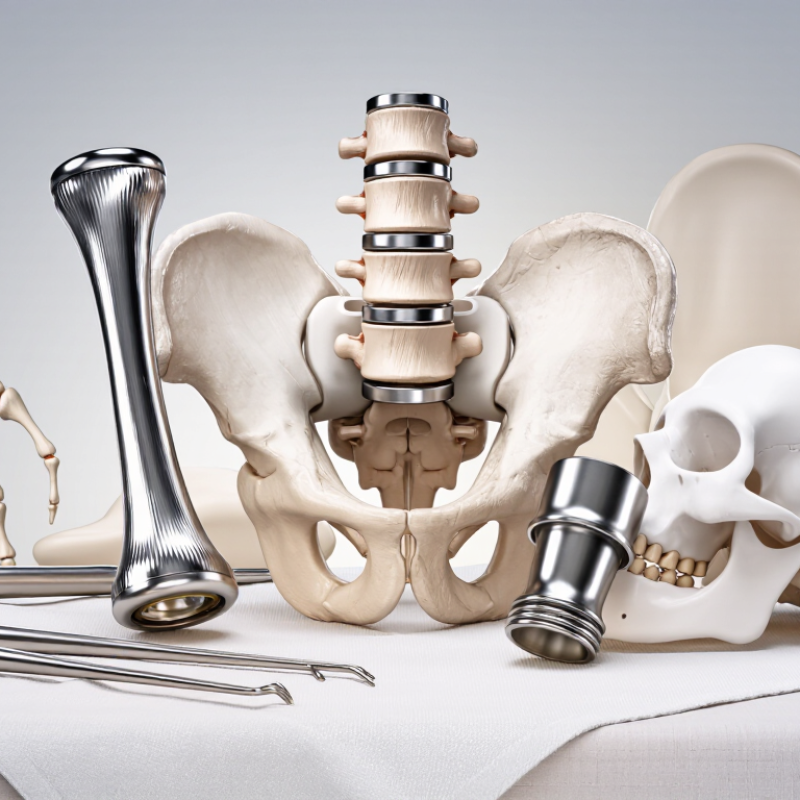
The “best” orthopedic implant is not simply the hardest one. It must match the patient’s bone quality, anatomy, activity, and surgical plan. Titanium often offers a favorable strength-to-weight balance. Cobalt-chromium resists wear. Highly cross-linked polyethylene can reduce debris in joint replacements. Ceramic surfaces may provide smooth motion, but they still require careful positioning.
Fit matters greatly. A few millimeters can change joint loading, comfort, and long-term stability. Function matters more than appearance. The 2024 National Joint Registry report tracks over three million hip and knee procedures, showing how implant survival varies by age, joint, fixation method, and patient factors. A Lancet analysis of more than 200,000 hip replacements found about 58.7% remained unrevised at 25 years. Permanent is not guaranteed.
Tips: Ask how the implant fits your bone, not only its material. Discuss fixation, expected activity, revision risks, and follow-up imaging. Bring your questions in writing. It helps.
From clinical practice, recovery also reveals performance. A stable implant should support walking, stairs, and daily movement without persistent swelling or instability. Yet no design suits everyone. Surgical technique, rehabilitation, body weight, and future falls can change the result. The “best” choice may still need review over time. That is an uncomfortable truth.
2026 Best Orthopedic Implants: Are They Permanent?
Joint implants are not usually permanent. Large national joint registries provide the clearest long-term evidence, tracking thousands of hip and knee replacements for 10 to 20 years. Many contemporary implants show survival above 90% at ten years. At twenty years, survival commonly falls into the 70% to 85% range, depending on the joint, patient age, activity, surgical method, and implant design.
These figures describe freedom from revision surgery, not perfect comfort. A person may walk daily, climb stairs, and still show gradual wear on an X-ray. Pain, loosening, infection, fractures, or instability can require another operation. Younger and highly active patients may place greater mechanical demands on the implant. Body weight and bone quality also matter.
Registry data is powerful, but not flawless. It reflects real-world care across many hospitals, yet coding differences and incomplete follow-up can affect results. A 20-year survival rate is not a personal countdown. It is a population estimate. Your surgeon should review imaging, symptoms, age, activity level, and medical history together. The best implant is not simply the newest one. It is the option supported by reliable evidence and matched to your anatomy and daily needs. Long-term monitoring still matters, even when the joint feels normal.
How Long Do Implants Last? 10–20-Year Survival Data from Joint Registries
The chart shows rounded, representative revision-free survival estimates for primary total hip and total knee replacements at 10, 15, and 20 years. These figures are synthesized from publicly reported national joint registry data, including the Australian Orthopaedic Association National Joint Replacement Registry, the UK National Joint Registry, and Nordic arthroplasty registry publications. Actual implant longevity varies by age, activity level, diagnosis, surgical technique, implant design, and patient health.
Orthopedic implants are durable, but “permanent” is the wrong promise. National registries show that revision risk continues after surgery, even when early recovery looks excellent. The National Joint Registry’s 21st Annual Report describes generally low ten-year revision rates for many primary hip and knee procedures, while younger patients face higher lifetime risk. Time matters.
Wear is gradual. Tiny particles can trigger inflammation around the implant. Bone may then weaken, creating loosening and pain during walking. Infection behaves differently. It may appear with fever, drainage, or only persistent stiffness. Studies commonly estimate periprosthetic joint infection at about 1% to 2% after primary joint replacement, though risks vary by patient and procedure. Small percentages still represent thousands of real people.
The Australian Orthopaedic Association National Joint Replacement Registry’s 2024 report also shows revision risk increasing over longer follow-up. Causes include wear, loosening, fracture, instability, and infection. A revision is usually more complex than the first operation. Recovery can be longer. Results may be less predictable.
The uncomfortable point is this: registry averages cannot predict one patient. Smoking, obesity, diabetes, activity level, bone quality, and surgical factors change the equation. Even excellent care cannot remove every failure risk. I would question any article promising lifetime permanence. Regular clinical review, new pain, swelling, warmth, or reduced function deserve prompt assessment.
| Implant Category | Is It Usually Permanent? | Typical Long-Term Survivorship | Common Failure Mechanisms | Approximate Primary Revision Risk | Factors That Increase Failure Risk | Typical Revision Approach |
|---|---|---|---|---|---|---|
| Total Hip Replacement | Usually intended to remain permanently, but some patients require revision during their lifetime. | Approximately 93–97% at 10 years; about 75–90% at 20 years, depending on age, implant design, activity level, and registry population. | Aseptic loosening, polyethylene wear and osteolysis, instability or dislocation, periprosthetic fracture, infection, and adverse local tissue reaction. | Approximately 3–7% by 10 years in many contemporary registry and cohort studies; lifetime risk is higher in younger patients. | Younger age, high-impact activity, obesity, recurrent dislocation, poor bone quality, infection, and falls or trauma. | Exchange of worn components, liner or head replacement, acetabular or femoral component revision, or staged revision for infection. |
| Total Knee Replacement | Usually intended to be permanent, although wear, loosening, instability, infection, or fracture may lead to revision. | Approximately 90–95% at 10 years; about 70–85% at 20 years, with results varying by patient age and implant type. | Polyethylene wear, aseptic loosening, instability, stiffness, malalignment, periprosthetic fracture, infection, and persistent pain. | Approximately 5–10% by 10 years in many national registry datasets; risk is generally higher in younger and more active patients. | High body mass index, younger age, high activity, malalignment, instability, infection, diabetes, smoking, and poor rehabilitation. | Polyethylene insert exchange, isolated component revision, or full revision knee replacement; infection commonly requires staged treatment. |
| Reverse Shoulder Arthroplasty | Designed for long-term retention, but durability is affected by age, bone quality, shoulder function, and the underlying diagnosis. | Approximately 80–90% at 10 years in many modern clinical series; longer-term data are less extensive than for hip and knee replacements. | Periprosthetic infection, instability, scapular notching, acromial or scapular spine fracture, loosening, polyethylene wear, and neurologic complications. | Approximately 5–15% by 10 years, with higher rates reported in complex revision cases and some fracture-related indications. | Prior shoulder surgery, fracture indication, poor bone stock, instability, infection, neurologic impairment, and severe glenoid bone loss. | Closed reduction for selected dislocations, component exchange, bone grafting, or revision of glenoid and/or humeral components. |
| Anatomic Total Shoulder Replacement | Generally intended to be permanent, but glenoid component wear or loosening can limit longevity. | Approximately 85–95% at 10 years in contemporary series, although outcomes vary considerably by diagnosis and glenoid condition. | Glenoid polyethylene wear or loosening, rotator cuff failure, instability, infection, periprosthetic fracture, and humeral loosening. | Approximately 5–15% by 10 years; revision risk may be higher when rotator cuff function deteriorates. | Rotator cuff insufficiency, glenoid bone loss, inflammatory arthritis, younger age, high activity, infection, and poor bone quality. | Glenoid component revision, conversion to reverse shoulder arthroplasty, humeral revision, or staged surgery for infection. |
| Total Ankle Replacement | Intended for long-term use, but available long-term evidence is less mature than for hip and knee arthroplasty. | Approximately 80–90% at 10 years in many modern series; results differ substantially among patient groups and implant designs. | Aseptic loosening, subsidence, polyethylene wear, malalignment, cyst formation, infection, fracture, and adjacent joint degeneration. | Approximately 10–20% by 10 years in published series, with substantial variation between studies. | Severe deformity, poor bone quality, obesity, inflammatory disease, high-impact activity, malalignment, and infection. | Polyethylene exchange, realignment, component revision, bone grafting, or conversion to ankle fusion in selected cases. |
| Spinal Instrumentation and Fusion Hardware | Often left in place permanently after solid fusion, but removal or revision may be required if complications occur. | There is no single universal “lifespan.” Fusion success and hardware survival depend on spinal level, diagnosis, bone quality, and surgical technique. | Pseudarthrosis, screw loosening, rod or cage failure, adjacent-segment disease, infection, implant malposition, and recurrent spinal stenosis. | Approximately 5–20% revision risk within 2–10 years across commonly studied fusion populations; rates vary widely by procedure and patient risk. | Smoking, osteoporosis, diabetes, obesity, multilevel fusion, poor alignment, nonunion, trauma, and inadequate bone stock. | Bone grafting and re-fusion, hardware exchange, decompression, alignment correction, or removal after confirmed solid fusion. |
| Fracture Fixation Plates, Screws, and Intramedullary Nails | Not necessarily permanent. They may remain indefinitely or be removed after healing if they cause symptoms or complications. | Durability is measured by fracture healing rather than a standard 10- or 20-year survivorship figure. Most successfully healed constructs do not require routine removal. | Nonunion, malunion, implant breakage, loss of fixation, infection, tendon irritation, painful hardware, and refracture after premature removal. | Approximately 5–15% unplanned reoperation risk in many fracture populations, with much higher variation by fracture site and severity. | Open or severe fractures, smoking, diabetes, poor soft-tissue coverage, osteoporosis, infection, high-energy trauma, and noncompliance with weight-bearing restrictions. | Observation after healing, elective hardware removal for symptoms, exchange fixation, bone grafting, or staged treatment for infection or nonunion. |
Orthopedic implants are designed for long service, but “permanent” is not guaranteed. Their lifespan depends on material, joint location, activity, bone quality, and surgical technique. Published follow-up studies show that modern implants can function for many years, yet wear, loosening, or fracture may still occur.
Titanium is lightweight and usually supports strong bone fixation. It is often used for stems, screws, and structural components. Ceramic creates very low friction and resists scratching, which may reduce wear particles. However, it can be less forgiving under unusual impact. Cobalt-chrome is hard and durable, but it may produce more friction when paired with certain surfaces. Polyethylene remains widely used as a bearing material. Newer formulations can improve wear resistance, though no plastic is completely wear-proof. Material choice is a balance, not a contest. That matters.
Tips: Ask which surfaces contact each other, not only which metals are used. Discuss expected implant life, activity limits, and follow-up imaging with your orthopedic specialist. Keep realistic expectations. Even an excellent implant cannot correct poor bone healing or repeated high-impact stress. Weight management, muscle strength, and gradual activity may help protect the joint. Still, individual outcomes vary, and some decisions deserve a second review.
“Permanent” is an attractive word, but it is not medically precise. The AAOS American Joint Replacement Registry has tracked millions of hip and knee procedures. Its reports show strong early survivorship, yet revision risk remains real. The NJR 21st Annual Report also reports roughly 95% ten-year survival for many primary hip replacements. Several knee groups perform slightly lower. Results vary by implant type, surgical technique, body weight, and patient age. Younger patients often face greater lifetime revision risk. They have more years and more movement ahead.
Activity matters after recovery. Walking, swimming, and cycling usually create less impact than running or repeated jumping. High-impact loading may increase wear, loosening, or injury risk, although evidence is not perfectly uniform. That uncertainty deserves honesty. A younger, active patient may keep an implant for decades, but no registry can promise permanence. AAOS patient guidance supports individualized activity planning, rather than a universal deadline or restriction.
(AAOS AJRR Annual Report; NJR 21st Annual Report)
Tips: Ask your surgeon about age-specific revision rates, implant fixation, and realistic activity limits. Keep follow-up visits, even when the joint feels normal. Report new swelling, instability, or persistent pain promptly. Weight management can reduce mechanical stress. Do not treat one impressive registry percentage as a personal guarantee.
Many remain functional beyond ten years. Survival often exceeds 90% at ten years. At twenty years, survival commonly ranges from 70% to 85%. These figures describe avoided revision surgery, not perfect comfort.
No. It is a population estimate, not a personal countdown. Your age, bone quality, activity, imaging, and medical history all matter. The number helps, but it cannot see your knee or hip.
Wear, loosening, infection, fracture, and instability can require another operation. Repeated high-impact activity may increase mechanical stress. Sometimes the reason is unclear. That uncertainty deserves honest discussion.
Material choice is a balance, not a simple contest. Titanium supports fixation and is lightweight. Ceramic offers low friction and resists scratching. Cobalt-chrome is hard and durable. The best pairing depends on the joint and your anatomy.
No plastic is completely wear-proof. Newer formulations may resist wear better. Tiny changes can develop even while you walk comfortably. An X-ray may show gradual wear before symptoms appear.
Yes. You may walk daily and climb stairs without obvious pain. Wear or loosening may still appear on imaging. Long-term monitoring matters, even when the joint feels normal.
Younger and highly active patients may place greater stress on the implant. Running, jumping, or repeated impact can matter. Gradual activity and stronger muscles may help protect the joint. I would not treat “active” as automatically dangerous.
Ask which surfaces contact each other. Discuss expected implant life, activity limits, and follow-up imaging. Ask how the design matches your bone and daily routine. A second review may be worthwhile when the decision feels uncertain.
Are orthopedic implants permanent? In most cases, no. Modern orthopedic implants are designed to restore movement, reduce pain, and function reliably for many years, but their lifespan depends on material quality, surgical fit, bone health, and daily activity. Joint registry evidence commonly reports strong survival over 10–20 years, although outcomes vary by implant type, patient age, and body weight.
Implants may eventually fail because of wear, loosening, infection, fracture, or changes in the surrounding bone, sometimes requiring revision surgery. Titanium, ceramic, cobalt-chrome, and advanced polyethylene each offer different advantages in strength, stability, and resistance to wear. Younger or highly active patients may place greater stress on an implant, while older adults may experience longer service because of lower activity levels. Careful follow-up, healthy weight management, and appropriate activity can help maximize implant longevity.
