Sete Orthopedic Implants Sete Orthopedic Implants

2026 Best Guide Can You Lift Heavy Things With Orthopedic Implants?

Time:2026-09-19 Author:Liam
0%

Can you lift heavy things with orthopedic implants? The answer depends on the implant, the treated joint, your bone healing, and your surgeon’s instructions. A hip replacement, spinal fusion, knee implant, or internal fixation device can restore movement, but it does not automatically restore unlimited strength. Recovery is measured in weeks and months, not optimistic promises.

Picture a grocery bag, a suitcase, or a loaded toolbox. Each object creates different forces through your bones, muscles, and implant. Lifting technique matters too. Bending, twisting, and sudden pulling may increase stress around healing tissue. Some patients return to demanding work, while others need permanent limits. The difference may involve implant design, surgical success, muscle conditioning, pain, age, and existing health conditions.

Medical guidance must remain personal. An orthopedic surgeon or physical therapist can review imaging, healing progress, and functional goals before approving heavier loads. Do not test your implant by lifting until pain appears. That approach can hide problems rather than prove strength. Even reliable general advice has boundaries. It may not fit your operation or recovery stage. This guide explains common principles, warning signs, and safer progression strategies, while recognizing an important uncertainty: research does not provide one universal lifting limit for every orthopedic implant. Your clinical team’s advice should carry the greatest authority.
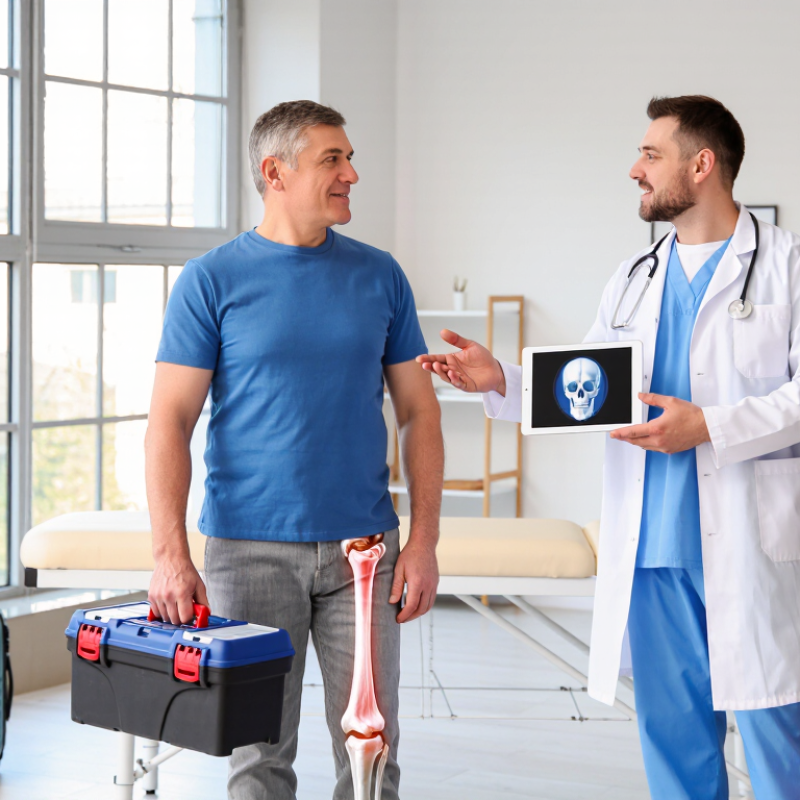
2026 Best Guide Can You Lift Heavy Things With Orthopedic Implants?

Understanding How Orthopedic Implants Affect Lifting Ability

Orthopedic implants can restore stability, reduce pain, and support movement. They do not automatically restore full lifting ability. Your safe limit depends on the implant’s location, surgical technique, bone quality, and recovery stage. A shoulder replacement may restrict overhead lifting, while a knee implant may affect squatting, carrying, or climbing.

Healing tissues need time. Early lifting can strain muscles, loosen fixation, or disturb bone growth around the implant. A light grocery bag may be acceptable for one patient but excessive for another. Your surgeon or physical therapist should set practical limits based on imaging, strength, and movement control. Follow-up appointments matter.

Progress should be gradual. Start with controlled movements, stable posture, and the weight recommended by your care team. Avoid sudden twisting, jerking, or lifting from the floor without instruction. Stop if you notice increasing pain, swelling, warmth, weakness, or a change in joint alignment. These signs deserve medical advice.

It is tempting to treat “cleared for activity” as permission to lift heavily. That interpretation can be wrong. Clearance often means normal daily movement, not unrestricted strength training. Some people recover quickly; others need months of careful conditioning. The safest plan may feel frustratingly slow, but rushing can create setbacks. Your body’s feedback is useful, though it cannot replace professional assessment.

Factors That Determine Safe Weight Limits After Implant Surgery

2026 Best Guide: Can You Lift Heavy Things With Orthopedic Implants?

Safe lifting after implant surgery depends on more than the implant itself. Your surgeon considers the joint or bone repaired, surgical technique, and implant stability. Bone healing is also critical. A stable knee replacement differs from a healing fracture fixation. Muscle strength, balance, pain, and swelling matter too. Medical conditions, age, body weight, and smoking can influence recovery. Your work and lifting technique also affect the final recommendation.

A common mistake is using pain as the only warning. Pain may appear late, while excessive force has already irritated healing tissue. I would not treat one comfortable day as proof of full strength. Early restrictions may include avoiding heavy bags, twisting, sudden pulling, or uneven loads. Follow-up examinations and imaging help determine when resistance can increase. Never copy another patient’s weight limit. Their implant, bone quality, and recovery may be different.

Tips:

Ask your surgeon for a specific lifting limit and timeline.
Keep loads close to your body.
Bend through your hips and knees, not your back.
Increase weight slowly under rehabilitation guidance.
Stop if you notice sharp pain, new swelling, warmth, weakness, or a change in movement.
A therapist can check your form with practical tasks, such as lifting a grocery bag from floor level.

Clearance should be personal, documented, and based on healing—not optimism.

How to Assess Readiness for Heavy Lifting Step by Step

Can You Lift Heavy Things With Orthopedic Implants?

Readiness for heavy lifting should be tested, not assumed. Begin with surgical clearance, healed skin, stable imaging, and controlled swelling. Your surgeon should confirm implant stability and bone healing. Pain changes the plan. Do not guess.

Next, assess movement quality. You should walk without limping, reach full available motion, and perform controlled bodyweight squats or step-ups. A physical therapist can compare strength between limbs. A 10% difference may deserve further training before heavier loads. However, this threshold is practical, not universal. Implant location, fixation method, bone quality, and surgical history matter.

Load progression should feel boring. Start with household objects, then increase weight by about 5–10% only when symptoms remain calm for 24 hours. Stop for sharp pain, new weakness, joint instability, warmth, or swelling that persists. The World Health Organization’s 2022 Global Status Report on Physical Activity found that 31% of adults worldwide were insufficiently active, showing why general conditioning matters after surgery. Yet fitness does not prove implant readiness. National joint-registry reports also show that revision risk varies by age, implant type, and patient factors, not lifting weight alone. A neat checklist can mislead. Your real limit may change week by week.

Recommended Lifting Techniques for Protecting Orthopedic Implants

Recommended Lifting Techniques for Protecting Orthopedic Implants

Orthopedic implants do not automatically prohibit heavy lifting. However, the safe limit depends on healing, implant location, bone quality, and surgical advice. The 2024 American Joint Replacement Registry Annual Report analyzes more than three million hip and knee procedures. It also shows that outcomes vary across patients, procedures, and follow-up periods. Therefore, one universal lifting limit cannot protect everyone.

Start with clearance from your orthopedic surgeon or physical therapist. Use a hip-hinge motion, keeping your back neutral and the object close to your body. Bend your knees without allowing them to collapse inward. Push through your legs, not your surgical joint. Avoid twisting while carrying. Turn with your feet instead. A cart or second person is often safer than confidence.

Keep it controlled.

The Revised NIOSH Lifting Equation uses 23 kilograms as a recommended weight limit under ideal workplace conditions. That figure is not a safe post-surgery target. Distance, repetition, grip height, and twisting can reduce tolerance quickly. I once treated the weight number as the main issue; that was too simplistic. Movement quality matters more than bravado. Increase loads gradually, and stop when pain, swelling, instability, unusual warmth, or weakness appears. Report persistent symptoms promptly, even when the incision looks healed.

2026 Best Guide: Can You Lift Heavy Things With Orthopedic Implants? — Recommended Lifting Techniques for Protecting Orthopedic Implants

Orthopedic Implant or Procedure What Is Generally Known About Heavy Lifting? Safer Lifting Priorities Important Cautions
Total hip replacement Many people return to daily lifting after recovery, but there is no single safe weight limit for every patient. Repetitive heavy loading and high-impact activities may increase stress on the hip and surrounding tissues. Keep the load close to the body, avoid twisting while carrying, use both hands, and increase weight gradually only after strength and movement have returned. Follow the surgeon’s temporary movement precautions, especially during the first weeks. Stop for new groin or thigh pain, instability, swelling, or a sudden loss of function.
Total knee replacement Lifting is usually limited by pain, swelling, balance, and muscle weakness rather than by one universal permanent weight threshold. High-impact or repetitive heavy activities may be discouraged. Use a stable stance, bend through the hips and knees, keep the knees aligned with the toes, and avoid carrying loads while climbing stairs until balance is reliable. Persistent swelling, warmth, increasing pain, buckling, or reduced range of motion should be assessed by a clinician.
Shoulder replacement Heavy overhead lifting, forceful pushing or pulling, and repetitive strenuous work can place substantial stress on the shoulder replacement and repaired soft tissues. Some long-term limits may apply. Keep loads below shoulder height when possible, use two hands, avoid jerking, and favor controlled movements with the elbow close to the body. Do not resume heavy overhead work until specifically cleared. New weakness, a change in shoulder shape, a painful click, or loss of motion requires medical review.
Spinal fusion or spinal instrumentation Early restrictions commonly focus on avoiding bending, lifting, and twisting while bone healing and muscle recovery occur. The timing and eventual lifting capacity vary widely with the spinal level, procedure, and healing progress. Use a hip-hinge technique, keep the spine neutral, avoid rotation under load, divide heavy items into smaller loads, and use assistive equipment when available. Increasing back or leg pain, numbness, weakness, balance problems, fever, or wound drainage should be reported promptly.
Fracture fixation plates, screws, rods, or nails Weight-bearing and lifting capacity depend on fracture location, fixation stability, bone healing seen on imaging, and the treating clinician’s instructions. Hardware does not automatically mean the bone is fully healed. Progress in stages: protected movement, light resistance, functional lifting, then heavier activity only after clinical and imaging-based clearance. Do not use pain tolerance alone to judge healing. Sudden pain, deformity, unusual movement, or a new grinding sensation needs prompt evaluation.
Ligament or tendon repair with anchors or other implants The repaired tendon or ligament may be the limiting factor, particularly during the early biological healing period. Heavy loading too soon can risk stretching or disrupting the repair. Use the prescribed rehabilitation sequence, emphasize controlled resistance, and avoid sudden acceleration, ballistic lifting, or maximal-effort testing. Follow the rehabilitation plan even if pain is low. A pop, sudden weakness, bruising, or loss of function should be assessed promptly.

Recommended Lifting Techniques for Protecting Orthopedic Implants

Technique How to Apply It Why It Helps
Plan before lifting Check the path, remove obstacles, test the load, and ask for help with bulky or unstable objects. Reduces unexpected twisting, stumbling, and sudden loading.
Keep the load close Hold the object near the waist or torso with both hands whenever possible. A shorter distance from the body generally reduces the leverage and muscular effort required.
Hinge at the hips Move the hips backward, keep the back in a comfortable neutral position, and use the legs to stand. Distributes effort through the hips and legs instead of relying mainly on the back or a healing joint.
Avoid twisting under load Turn by moving the feet and whole body rather than rotating the trunk, pelvis, or operated limb. Limits rotational stress on the spine, hip, knee, shoulder, and healing soft tissues.
Use a gradual progression Increase only one factor at a time—weight, repetitions, distance, or frequency—and monitor symptoms for the next 24 hours. Helps identify excessive loading before symptoms become persistent.
Choose mechanical assistance Use carts, lifting aids, adjustable work surfaces, smaller containers, or team lifting for demanding tasks. Reduces peak force and repetitive strain on the implant and surrounding tissues.
Medical safety note: There is no universal “safe heavy-lifting weight” for all orthopedic implants. The appropriate limit depends on the implant or repair, surgical approach, healing status, bone quality, strength, symptoms, occupation, and imaging findings. The operating surgeon or physical therapist should provide the individualized clearance and progression plan.

Warning Signs That Mean You Should Stop Lifting and Seek Medical Advice

2026 Best Guide: Warning Signs That Mean You Should Stop Lifting and Seek Medical Advice

Lifting after orthopedic implant surgery requires patience, not guesswork. Stop immediately if you feel sudden, sharp, or worsening pain around the implant. Do not “push through” it. New swelling, warmth, redness, or fluid from the incision also needs prompt medical attention. These signs may indicate irritation, infection, or another complication.

Pay attention to changes in function. Stop lifting if the joint feels unstable, locks, gives way, or produces a new, persistent clicking sensation. Numbness, tingling, unusual weakness, or a pale or bluish limb are especially concerning. Seek urgent care for severe pain, fever, chest pain, or shortness of breath. Keep the affected area supported while waiting for professional advice.

A common mistake is judging safety by muscle strength alone. The surrounding muscles may feel ready before the bone and implant interface has fully recovered. Your surgeon or physical therapist should set lifting limits, based on the implant location, healing progress, imaging, and daily symptoms. Recovery is not perfectly linear. A lighter load may still cause trouble if your technique is poor or fatigue changes your movement. Write down the weight, motion, and symptoms, then share those details with your healthcare provider.

Stop lifting immediately if any warning sign appears. New or worsening pain, swelling, instability, numbness, wound drainage, or fever should be discussed with a healthcare professional. Chest pain or sudden shortness of breath requires emergency care. The action levels shown are an educational guide, not a substitute for the instructions from your orthopedic surgeon.

FAQS

Can orthopedic implants restore my previous lifting ability?

They can improve stability, reduce pain, and support movement. They do not automatically restore full strength. Your safe limit depends on implant location, healing, bone quality, and professional guidance.

When can I start lifting after surgery?

Start only after clearance from your surgeon or physical therapist. Early healing tissues remain vulnerable. A light grocery bag may be too heavy for another person. Progress slowly.

Does “cleared for activity” mean I can lift heavy weights?

Not necessarily. Clearance may allow ordinary daily movement, not unrestricted strength training. Ask which weights, repetitions, and movements your clearance includes. This distinction is easy to miss.

What lifting technique can protect an orthopedic implant?

Keep the object close. Use a hip hinge and a neutral back. Bend your knees without letting them collapse inward. Push through your legs. Turn with your feet, not your trunk.

Should I use a cart or ask someone for help?

Often, yes. A cart or second person can reduce strain. Confidence is not a lifting plan. I might underestimate a familiar bag, especially when carrying it repeatedly.

Is a standard lifting number safe after surgery?

No universal number fits everyone. Distance, repetition, grip height, and twisting can quickly reduce tolerance. A general workplace figure is not a personal post-surgery target.

What symptoms mean I should stop lifting?

Stop if pain, swelling, warmth, weakness, instability, or changed joint alignment increases. Seek medical advice for persistent symptoms. A healed incision does not prove complete recovery.

How should I increase lifting loads?

Use controlled movements and stable posture. Increase weight gradually, following your care team’s limits. Avoid jerking, sudden twisting, or lifting from the floor without instruction. Slow can feel frustrating.

Conclusion

Can you lift heavy things with orthopedic implants? The answer depends on the type and location of the implant, the stability of the surgical repair, your bone and muscle strength, healing progress, and your healthcare provider’s recommendations. Implant surgery does not automatically prevent lifting, but returning to heavy activity too soon may place excessive stress on the surrounding tissues or compromise recovery. Safe weight limits should therefore be personalized rather than based on a general rule.

Before lifting, confirm that pain and swelling are controlled, movement is improving, and your strength and balance have been evaluated. Begin with light loads, increase gradually, and use protective techniques such as keeping the load close to your body, bending through the hips and knees, avoiding twisting, and stopping when fatigue affects your form. Stop immediately and seek medical advice if you experience increasing pain, swelling, instability, numbness, unusual sounds, redness, or reduced function. A gradual, supervised plan offers the safest path back to heavier lifting.

Liam

Liam

Liam is a dedicated marketing professional with a profound expertise in the industry, where he excels at highlighting the unique advantages of our core products. With a keen understanding of market trends and consumer needs, Liam frequently updates our company’s professional blog, providing......