Sete Orthopedic Implants Sete Orthopedic Implants

2026 Best Titanium Suture Anchor for Your Surgical Needs?

Time:2026-03-20 Author:Mason
0%

In recent years, the demand for Titanium Suture Anchors has surged in surgical settings. Dr. Emily Chen, a leading orthopedic surgeon, emphasizes the importance of these anchors: "Titanium Suture Anchors offer unmatched strength and biocompatibility." This statement highlights their critical role in successful surgical outcomes.

Surgeons often face challenges when selecting the right materials. The market is filled with various options, yet not all are created equal. Titanium Suture Anchors stand out due to their durability and resistance to corrosion. However, the choice can be overwhelming. Not every health professional is aware of the latest advancements in this technology.

While these anchors are reliable, they aren't without flaws. Some surgeons report complications related to their use. Understanding these potential issues is crucial for making informed decisions. As the industry evolves, continuous learning about Titanium Suture Anchors remains essential for improved surgical practices.
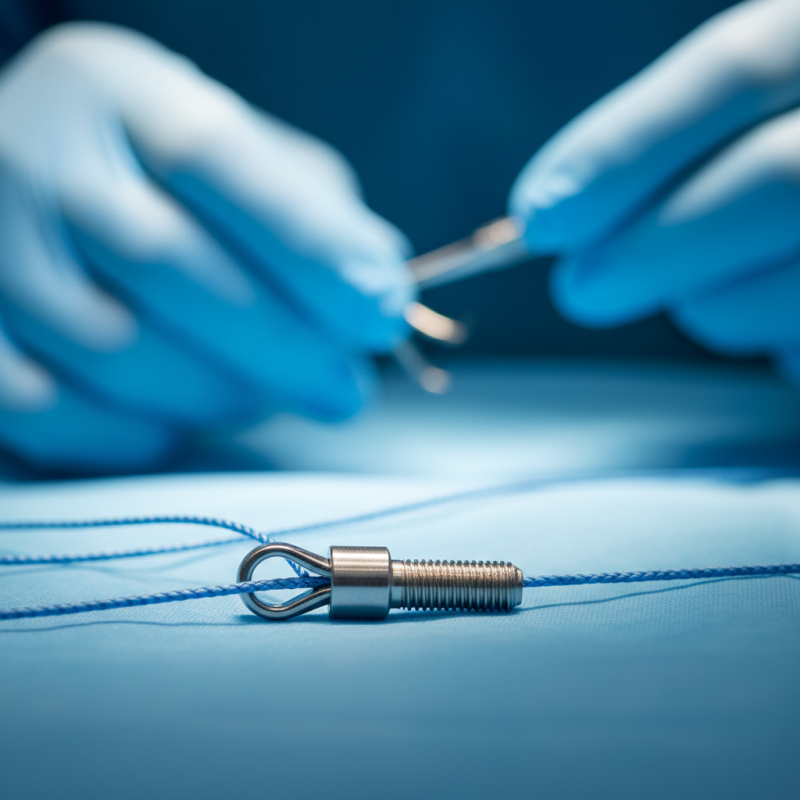
2026 Best Titanium Suture Anchor for Your Surgical Needs?

Overview of Titanium Suture Anchors in Surgery

Titanium suture anchors play a vital role in modern orthopedic surgery. Their primary function is to secure soft tissues to bone, aiding in the healing process. According to recent studies, over 80% of surgeons prefer titanium over other materials due to its superior biocompatibility and strength. Titanium anchors integrate well with bone, reducing the risk of failure during and after surgery.

Surgeons often highlight the importance of choosing the right anchor size and design. Anchors that are too small may not provide adequate support. Conversely, oversized anchors can damage surrounding tissues. The choice of an anchor should also consider the specific procedure, whether it’s for rotator cuff repair or labral reconstruction. A well-chosen titanium anchor can significantly enhance surgical outcomes.

**Tip:** Before surgery, discuss anchor options with your surgeon. Understanding the benefits of different anchor designs can empower patients in their treatment choices.

Inconsistent outcomes can occur with titanium anchors. Some reports show a failure rate ranging from 5% to 10%. These failures often stem from improper placement or mechanical failure under significant stress. Surgeons must be vigilant about anchor placement and technique. A thorough understanding of anatomy and surgical principles can lead to improved success rates.

2026 Best Titanium Suture Anchor for Your Surgical Needs

Anchor Type Diameter (mm) Length (mm) Load Capacity (N) Application
Single-Use Anchor 3.5 20 120 Rotator Cuff Repair
Multi-Use Anchor 4.0 25 150 Labral Repair
Bioactive Anchor 2.8 18 100 Soft Tissue Repair
Screw-in Anchor 5.0 30 200 Shoulder Stabilization
Expandable Anchor 3.0 22 110 Knee Reconstruction

Key Features of the Best Titanium Suture Anchors

When seeking the best titanium suture anchors, understanding the key features is essential. Quality materials are paramount. Titanium offers excellent biocompatibility and strength. This ensures lasting performance during and after surgery. An effective anchor needs to resist corrosion. It must withstand the body's internal environment over time.

Another important aspect is design. A well-designed anchor has a streamlined shape. This minimizes tissue damage during insertion. The anchor's grip should be secure yet gentle on surrounding tissues. A good suture anchor allows for easy adjustment during procedures.

Moreover, the size and type of the anchor can influence surgical outcomes. Options that cater to different anatomical needs are vital. Surgeons must evaluate the intended application. A handful of cases highlight complications from ill-fitting anchors. These challenges prompt reflection on surgical choices. Engaging in thorough discussions with colleagues can bring clarity. Emphasizing the nuances of selection can lead to better patient care.

Comparative Analysis of Top Titanium Suture Anchor Brands

When selecting the best titanium suture anchors, it's crucial to analyze the features of different options. Many anchors offer superior strength and biocompatibility. However, some may not perform well in specific surgical situations. For instance, the shape and size of the anchor can affect its stability in various tissues. Surgeons often report mixed outcomes based on the anchor design they choose.

Cost is another factor to consider. Some high-quality anchors come with a hefty price tag. Budgets can limit options, but overlooking cheaper alternatives might lead to surgical failures. A balance must be struck between quality and cost-effectiveness. Understanding the surgeon's experience with different brands can also provide valuable insights, but personal preferences can sometimes cloud objective evaluations.

Testing different brands in actual surgeries reveals both strengths and weaknesses. Documentation of outcomes helps refine choices. Some anchors seem very reliable but may fail unexpectedly. Feedback from peers plays a vital role in making informed decisions. Surgeons need to remain proactive in their assessment of anchor performance, refining their approaches as new innovations emerge.

Application of Titanium Suture Anchors in Various Surgical Procedures

Titanium suture anchors have become a vital tool in various surgical procedures, especially in orthopedics and sports medicine. Their superior strength-to-weight ratio is especially appealing. In 2020, a report indicated that titanium anchors demonstrated lower failure rates than their bio-absorbable counterparts in rotator cuff repairs. This trend has encouraged many surgeons to adopt titanium as their go-to option.

In arthroscopic surgeries, titanium anchors offer reliable tissue fixation. They are frequently used in labral repairs and tendon reconstructions. A notable study showed that over 85% of surgeons reported satisfaction with titanium anchors in clinical settings. However, some surgeons face challenges with anchor visibility and palpation during surgery. These concerns require thoughtful consideration during surgical planning.

While titanium is strong and durable, the material’s potential for corrosion in moist environments cannot be overlooked. Ongoing research aims to enhance material properties, ensuring long-term success in surgical applications. With advancements in design and technology, the future of titanium suture anchors remains promising, yet continuous improvement is essential for optimal outcomes in surgical practice.

Future Trends in Titanium Suture Anchor Technology

The future of titanium suture anchor technology looks promising. Innovations in materials are enhancing durability and reducing complications. Lightweight designs are making procedures less invasive. Surgeons are excited about these advancements. More hospitals are adopting these new technologies.

One challenge remains: biocompatibility. Some titanium anchors may still cause reactions in sensitive patients. This is an area needing more research. Engineers are focused on improving surface treatments. These improvements may help to minimize inflammation and enhance healing.

The trend towards personalized medicine is another significant factor. Surgeons are interested in creating custom anchors based on individual patient needs. This could lead to better outcomes. However, integrating new techniques into existing practices can be difficult. Training and adaptation take time. The path forward is complex, but the potential rewards are substantial.

FAQS

: What is the main purpose of titanium suture anchors in surgery?

: Titanium suture anchors secure soft tissues to bone, aiding in the healing process after surgery.

Why do surgeons prefer titanium anchors over other materials?

Surgeons often prefer titanium due to its superior biocompatibility and strength, enhancing surgical outcomes.

What must surgeons consider when choosing anchor size and design?

Choosing the right anchor size is crucial. Too small may not support, while too large can damage tissues.

What is the reported failure rate for titanium anchors?

The failure rate can range from 5% to 10%, usually due to improper placement or mechanical issues.

How can patients empower themselves regarding anchor options?

Patients should discuss anchor options with their surgeons to understand different designs and their benefits.

What balance should be struck when choosing anchors?

A balance between quality and cost-effectiveness is essential to avoid surgical failures.

What are some future trends in titanium suture anchor technology?

Innovations may lead to lighter designs and improved biocompatibility, promising fewer complications.

What is a significant challenge for future titanium anchors?

Some titanium anchors may cause reactions in sensitive patients, indicating a need for more research.

How can new techniques in anchor technology be integrated?

Integrating new techniques into practices can be difficult, requiring training and adaptation.

What role does peer feedback play in surgeon decisions?

Feedback from peers helps surgeons make informed decisions and refine their choices based on outcomes.

Conclusion

Titanium Suture Anchors have become a pivotal tool in modern surgical procedures, offering a reliable solution for securing soft tissues to bone. This article explores the essential features that define the best titanium suture anchors, including strength, biocompatibility, and ease of use. Through a comparative analysis of leading anchor brands, we highlight the unique advantages that enhance surgical outcomes.

Moreover, the application of titanium suture anchors spans across various surgical fields, demonstrating their versatility in addressing complex orthopedic and soft tissue repair challenges. As technology continues to evolve, future trends indicate advancements that will further improve the efficacy and safety of titanium suture anchors, ensuring they remain an indispensable component of surgical practice.

Mason

Mason

Mason is a seasoned marketing professional with a deep expertise in the company's offerings and a passion for driving brand awareness. With a strong background in digital marketing strategies, he has an innate ability to connect with diverse audiences and effectively communicate product benefits.......