Sete Orthopedic Implants Sete Orthopedic Implants

Can Children Get Orthopedic Implants in 2026?

Time:2026-11-24 Author:Amelia
0%

Can children get orthopedic implants? In many cases, yes, but the decision depends on the child’s injury or condition, remaining growth, and the implant’s purpose. A metal plate may stabilize a fracture near a knee; a screw may help hold a bone in position. The right choice is specific to the child.

Pediatric orthopaedic surgeon Dr. Peter M. Waters is an experienced specialist in children’s bone and joint care. A relevant clinical principle, paraphrased rather than presented as his verified direct quote, is: “Treatment should account for a child’s growth, not just the immediate repair.” That distinction matters. Some implants stay in place, while others may be removed or adjusted as healing progresses. Growth can change the plan.

Families should ask how an implant may affect nearby growth plates, what follow-up imaging is expected, and which symptoms need prompt review. The answer is not always simple. An implant can support healing, but it also requires careful monitoring and a clear plan.

This 2026 guide explains common pediatric orthopedic implants, how specialists choose them, and what recovery may involve. It offers general information, not a diagnosis. A child’s orthopaedic team can explain the risks and options for that specific case.
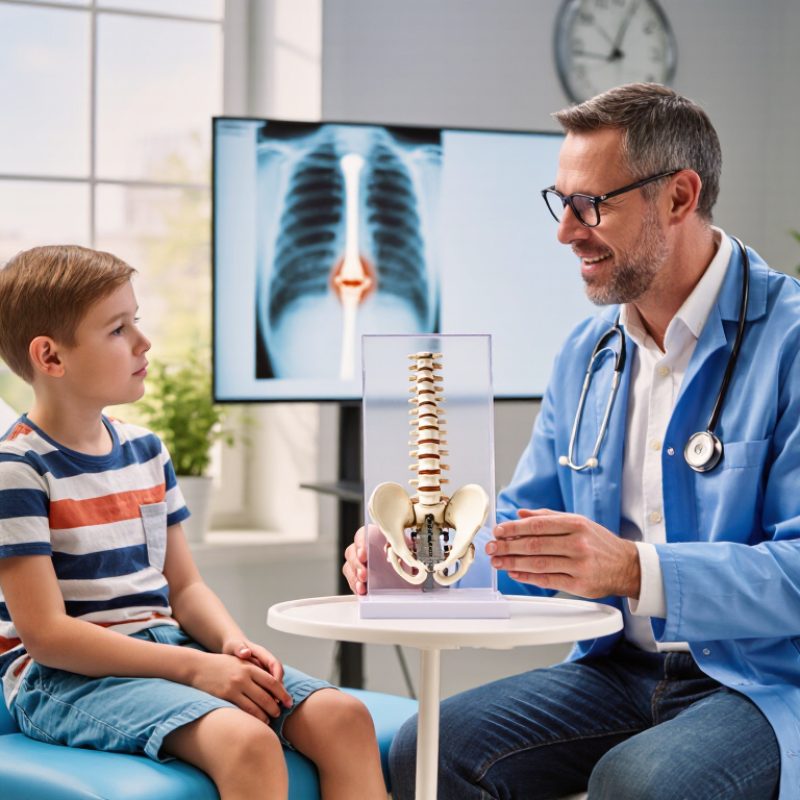
Can Children Get Orthopedic Implants in 2026?

Which Orthopedic Implants Are Used to Treat Children?

Children can receive orthopedic implants when a specialist determines that support is needed for a fracture, bone deformity, or spinal condition. The choice depends on the child’s age, bone size, injury, and remaining growth. A plan may change as the child grows.

Small pins or wires can hold certain fractures in place, often for a limited period. Plates and screws may stabilize broken bones or bones repositioned during surgery. Flexible rods placed inside long bones can support some fractures while allowing movement. External fixators use pins connected to a frame outside the body; they may help with complex injuries or gradual bone correction. For selected spinal conditions, growing rods can be adjusted as a child grows. Guided-growth plates may help gradually correct some limb angles. No implant suits every child.

Tips: Ask how the implant may affect nearby growth areas, how long it is expected to stay, and what follow-up imaging is needed. Keep scheduled visits, even when the child feels fine. Growth can be unpredictable, and the best plan may need revision. Discuss risks and options with a pediatric orthopedic specialist.

When Might a Child Need an Orthopedic Implant?

Can Children Get Orthopedic Implants in 2026?

When Might a Child Need an Orthopedic Implant?

A child may need an orthopedic implant when a bone or joint cannot heal or function well with casting, bracing, or other treatment alone. For example, a complex fracture may be too unstable to hold in place with a cast. A surgeon might use screws, a plate, or a rod to keep the bone aligned while it heals. The choice depends on the injury and the child’s stage of growth.

Implants can also help correct certain bone deformities or stabilize bones affected by some medical conditions. In selected cases, they may support reconstruction after bone surgery. A joint replacement is less common in children because bones are still growing and an artificial joint may not fit future needs. Growth matters. There is no simple age cutoff, which can make decisions feel uncertain.

A pediatric orthopedic specialist weighs X-rays or other imaging, pain, movement, overall health, and remaining growth. Families should ask whether an implant is expected to stay in place or may need removal later. Some devices remain after healing; others are removed if they cause problems or interfere with care. Each case differs, and even a clear-looking image does not tell the whole story. The treatment plan should reflect the child’s specific needs and include follow-up as they grow.

How Do Growth Plates Affect Implant Choices?

Can Children Get Orthopedic Implants in 2026?

A child may need an orthopedic implant to stabilize a fracture or correct a bone problem. Growth plates are areas of developing cartilage near the ends of many bones. They help bones lengthen as a child grows. Their location and whether they are still open can affect where a surgeon places screws, pins, or plates. Growth matters. An implant that crosses a growth plate may disturb growth in some cases, but the risk depends on the child, the injury, and the device’s position. Avoiding the plate is not always safer if the bone needs stable support.

Tips: Ask the orthopedic surgeon which growth plates remain open and whether the planned implant will cross one. Find out what follow-up imaging is needed. Keep appointments, even when the child feels well; changes in limb length or alignment may appear gradually.

Treatment choices depend on the fracture, the child’s remaining growth, and how the bone is healing. Some implants are removed later, while others can stay in place; removal is not automatic. I would not treat a single X-ray as the whole story. A specialist may track healing and limb alignment over time, then adjust the plan if concerns arise. If pain worsens, the limb looks newly crooked, or movement changes, contact the treating team.

Can Children Get Orthopedic Implants in 2026? How Growth Plates Affect Implant Choices

Clinical situation How growth plates matter Common implant considerations Key planning points
Fracture near, but not involving, a growth plate The physis may remain intact, but an implant placed too close to or across it could injure the growing bone. Depending on the fracture, treatment may use casting, pins, screws, plates, or flexible intramedullary nails. Surgeons generally aim to stabilize the fracture while avoiding the physis when practical. The best method depends on the bone, fracture pattern, and child’s age.
Fracture that crosses or damages a growth plate The injury itself can affect future growth, potentially causing growth arrest, limb-length difference, or angular deformity. Some fractures can be treated without an implant; others need carefully positioned pins or screws to maintain alignment. Prompt assessment and follow-up imaging may be important. Monitoring can continue after the fracture heals if there is concern about growth disturbance.
Unstable long-bone fracture Implant entry points and the path of the implant must be considered in relation to nearby growth plates. Flexible intramedullary nails are used for selected pediatric long-bone fractures; plates or other fixation may be more appropriate in other cases. These devices are not suitable for every fracture. The child’s size, fracture location, stability, and remaining growth help guide selection.
Corrective surgery for a growth-related deformity In some cases, a growth plate can be guided or intentionally slowed or stopped to address a developing deformity or limb-length difference. Temporary growth-modulation implants or procedures that permanently stop growth at a selected physis may be considered. Timing is crucial: the plan depends on the cause of the problem, the amount of growth remaining, and the expected correction.
Spinal deformity requiring surgical stabilization Remaining spinal growth can influence the choice between conventional fusion and growth-preserving or growth-friendly approaches. Depending on the diagnosis and growth remaining, treatment may involve spinal implants, fusion, or a growth-friendly strategy. Care is individualized by a pediatric spine team; the approach depends on the curve, age, maturity, and overall health.
Joint replacement in a child Continued bone growth and development can make a standard adult joint replacement a poor fit for many growing children. Joint replacement is uncommon in children, but may be considered in selected cases of severe joint damage or disease. Specialist assessment is important. Implant lifespan, future revision surgery, activity, and growth must be discussed.
Implant removal after healing Removal may be considered if an implant is prominent, irritating nearby tissue, or affecting growth or function; removal itself has risks. Some implants are routinely removed in certain situations, while others may safely remain in place. Removal is not automatic. The decision depends on implant type, location, symptoms, healing, and the risks of another operation.

Important: Children can receive orthopedic implants when clinically needed. Growth plates do not automatically rule out implant use; they influence implant choice, placement, timing, and follow-up. Treatment decisions should be made by a qualified pediatric orthopedic specialist based on the individual child.

What Happens During Implant Surgery and Recovery?

During pediatric implant surgery, the child is usually under general anesthesia. The surgeon uses imaging to guide a plate, screws, or a rod into position. The choice depends on the injury, bone size, and whether growth plates are involved. Parents can ask how the implant may affect future growth and whether removal might later be considered.

Recovery varies with the operation and the child’s health. The care team explains wound care, pain control, and when weight-bearing can begin; some children need crutches or a cast, followed by physical therapy. Follow-up visits check healing and growth. One detail is easy to underestimate: progress may feel slow between appointments. The Global Burden of Disease 2019 study estimated 178 million new fractures worldwide that year, across all ages. That figure gives context, not a prediction for an individual child’s recovery.

Tips: Keep the discharge instructions nearby, track medicines and appointments, and contact the care team about increasing pain, fever, wound redness, or new swelling. Ask before changing activity limits. Small steps matter.

How Are Implants Monitored as a Child Grows?

As a child grows, an orthopedic implant does not grow with them. Follow-up care helps the orthopedic team check whether the bone is healing and the implant remains well positioned. At visits, clinicians may ask about pain, walking, play, and changes in movement. They may also check limb length, joint motion, and the child’s growth.

X-rays can show bone healing, alignment, and changes around the implant. Imaging is chosen when it can answer a clinical question, with exposure kept as low as reasonably possible. The timing depends on the injury or condition, the child’s age, and the type of implant. There is no single schedule for every child. Growth plates need particular attention, since changes in bone growth can affect limb length or alignment.

Some implants are intended to stay in place; others may be removed if symptoms or treatment plans call for it. Removal is not automatic. New or worsening pain, swelling, warmth, or reduced movement should be discussed promptly with the care team. Follow-up visits can be hard to fit into family life. Still, a normal-looking scan cannot tell the whole story, so symptoms and examination matter too.

FAQS

What are growth plates?

Growth plates are developing cartilage near the ends of many bones. They help bones lengthen as a child grows.

Can an orthopedic implant affect a child’s growth?

It may, if it crosses a growth plate, but the risk depends on the child, injury, and implant position. Growth matters.

What should families ask before surgery?

Ask which growth plates remain open and whether the planned implant crosses one. Also ask what follow-up imaging may be needed.

How do clinicians monitor an implant as a child grows?

They may check pain, walking, movement, limb length, joint motion, and alignment. X-rays can show healing and implant position.

Does every child need the same follow-up schedule?

No. Timing depends on the injury or condition, the child’s age, and the implant. There is no single schedule.

Does an implant always need to be removed?

No. Some implants stay in place; others may be removed if symptoms or the treatment plan call for it. Removal is not automatic.

What changes should families report?

Contact the care team about worsening pain, swelling, warmth, reduced movement, or a limb that looks newly crooked. Don’t wait for the next visit.

Is a normal-looking X-ray enough to confirm everything is fine?

Not always. A scan cannot tell the whole story; symptoms and examination matter too. Slow changes can be easy to miss.

Conclusion

Can children get orthopedic implants? Yes, children may receive implants when they are needed to treat serious fractures, bone or joint conditions, or problems with limb alignment. Depending on the child’s needs, treatment may use devices such as plates, screws, rods, or pins to stabilize bone and support healing. Because children are still growing, orthopedic specialists consider the location of growth plates when choosing an implant and planning surgery, aiming to avoid interfering with normal bone development whenever possible.

Surgery and recovery vary according to the condition and the implant used. After the procedure, a child may need pain management, activity restrictions, physical therapy, or follow-up imaging as healing progresses. Ongoing monitoring is especially important as the child grows: clinicians check bone alignment, healing, and growth, and may adjust the care plan or consider removing an implant if appropriate. The timing and approach are individualized for each child.

Amelia

Amelia

Amelia is a seasoned marketing professional with a wealth of expertise in our company’s core offerings. With an unwavering passion for driving growth and innovation, she plays a pivotal role in shaping our marketing strategies and enhancing brand visibility. A key aspect of her responsibilities......