In the realm of surgical procedures, the choice of materials is crucial. The "Maxillofacial Bone Plate" stands out in this context. Dr. Emily Carter, a renowned expert in maxillofacial surgery, emphasizes, “Maxillofacial Bone Plates provide unmatched stability during recovery.” This assertion highlights their importance in surgical applications.
Many surgeons appreciate the versatility of the Maxillofacial Bone Plate. These plates come in various shapes and sizes, catering to different surgical needs. However, not every plate achieves the desired outcomes. Some may struggle with balancing rigidity and flexibility. An ideal plate should promote healing while ensuring proper alignment.
Incorporating Maxillofacial Bone Plates often raises questions. Are they suitable for all patients? The answer can vary. Factors include the patient's specific needs and the complexity of the surgery. Continuous reflection on these parameters is essential for success in surgical practices. The choice to use Maxillofacial Bone Plates requires careful consideration.
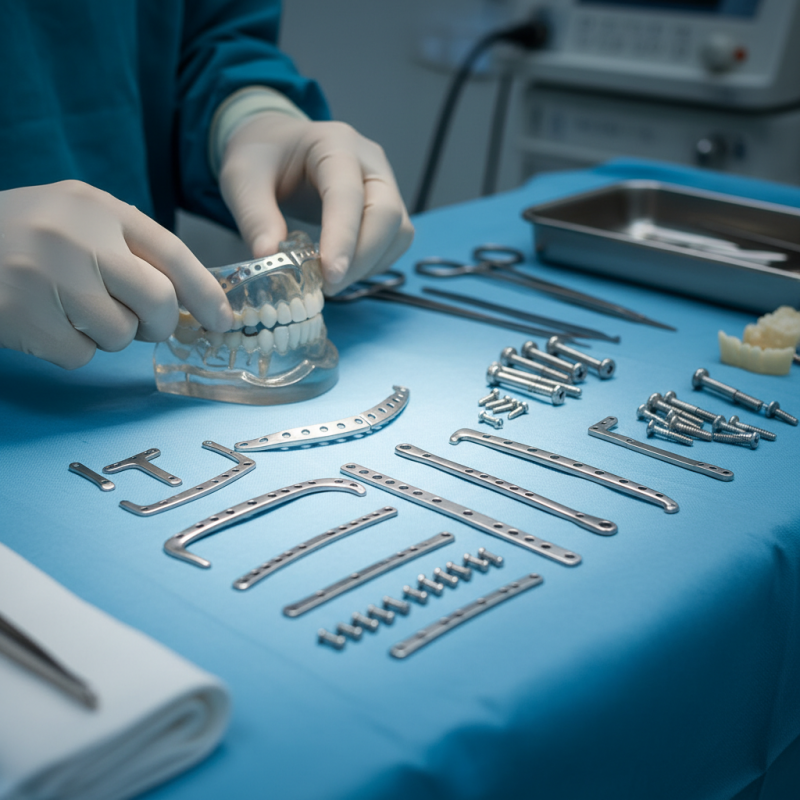
Why the Maxillofacial Bone Plate is Essential for Facial Reconstruction
Maxillofacial bone plates are crucial in facial reconstruction. They provide stability to fractured facial structures. Surgeons use these plates to connect broken bones effectively. This connection helps in proper alignment and healing. A well-aligned face can enhance appearance and function after trauma or surgery.
The materials used in these plates are often lightweight yet strong. This durability allows them to withstand stress during the healing process. Surgeons meticulously place these plates to ensure they support the facial skeleton. However, precision is key. Improper placement can lead to complications. Patients may experience discomfort or misalignment, requiring further interventions.
Choosing the right maxillofacial bone plate is essential for successful outcomes. Surgeons must consider various factors, like bone density and patient needs. Each case is unique, emphasizing the need for careful planning. Reflection on surgical techniques can lead to better results. The importance of these plates goes beyond functionality; they aid significantly in psychological recovery. A restored facial appearance can improve a patient’s self-esteem after an accident or surgery.
Key Advantages of Using Titanium in Maxillofacial Bone Plates
Maxillofacial surgery often requires precision and durability in bone fixation.
Titanium is increasingly preferred for bone plates in these procedures.
Reports indicate that titanium offers remarkable strength-to-weight ratio, making it lighter yet strong enough for reliable support.
Studies show that titanium plates can withstand stresses up to 300 MPa, which is critical during healing.
This durability contributes to better outcomes in surgical recovery.
Furthermore, titanium exhibits excellent biocompatibility.
This means reduced chances of infection and adverse reactions in patients.
Research shows that implants made from titanium have a failure rate of less than 3%.
This low figure is significant. It underscores titanium’s role in enhancing the success rate of maxillofacial surgeries.
Additionally, it is resistant to corrosion, ensuring longevity and stability in the body.
However, one must consider that not all patients respond the same way.
Some may still experience complications, despite the benefits of titanium.
Technical challenges in placing plates accurately can also arise, impacting effectiveness.
This highlights the need for skilled surgeons.
Despite its advantages, continuous evaluation and training are required for best practices.
Industry Statistics: Success Rates of Surgical Procedures with Bone Plates
When it comes to surgical procedures involving bone repair, maxillofacial bone plates are often a reliable choice. Recent statistics indicate that surgical procedures using bone plates have shown impressive success rates. For instance, many surgeons report a success rate exceeding 90%. This highlights the effectiveness of bone plates in ensuring proper alignment and support during the healing process.
However, it's important to acknowledge that not every procedure goes flawlessly. In some cases, complications can arise, such as infection or plate failure. These risks can prompt a thorough discussion between the surgical team and the patient. Understanding these potential issues is crucial for informed decision-making. It reminds both surgeons and patients that continuous evaluation and innovation within this field are essential.
Engaging in regular assessments of surgical outcomes can help refine techniques and materials. Gathering data on failures, as well as successes, can lead to improvements. By focusing on both aspects, the medical community can enhance the standard of care. This commitment to aftercare and feedback reinforces the necessity for ongoing learning and adaptation in surgical practices.
Why Choose Maxillofacial Bone Plate for Surgical Procedures? - Industry Statistics: Success Rates of Surgical Procedures with Bone Plates
| Procedure |
Success Rate (%) |
Complication Rate (%) |
Patient Satisfaction (%) |
| Orthognathic Surgery |
90 |
5 |
85 |
| Fracture Repair |
92 |
3 |
88 |
| Reconstructive Surgery |
88 |
4 |
90 |
| Bone Grafting |
85 |
6 |
82 |
| TMJ Surgery |
89 |
5 |
87 |
Comparative Analysis of Different Materials in Bone Plate Applications
When considering maxillofacial bone plates, material choice plays a critical role. Various materials, such as titanium, stainless steel, and biodegradable polymers, each have unique properties. Titanium offers strength and corrosion resistance, making it a popular choice. Stainless steel is also durable but can cause allergic reactions in some patients. Biodegradable options present a novel approach, as they dissolve over time, eliminating the need for removal surgery.
Yet, every material has its drawbacks. Titanium plates can be too rigid, potentially causing stress shielding in the bone. Stainless steel, while robust, can lead to complications due to its weight. Biodegradable polymers may lack the necessary strength for load-bearing applications. These issues highlight the ongoing need for innovation in the field. Developing new materials that blend the benefits of each while minimizing shortcomings could be key.
Surgeons must weigh these factors carefully. What works in one patient may not work in another. Comprehensive analysis of each material's long-term effects is essential. As the industry evolves, understanding these complex interactions will drive better outcomes and patient satisfaction.
Comparative Analysis of Different Materials in Bone Plate Applications
Recent Innovations in Maxillofacial Bone Plate Designs and Technologies
Recent advancements in maxillofacial bone plate designs have transformed surgical procedures.
Surgeons are now exploring materials that are lighter yet stronger.
Innovations like bioresorbable plates minimize the need for removal surgeries.
These advances make post-operative care easier for patients.
New technologies allow for improved customization of bone plates.
3D printing aids in creating patient-specific implants.
This approach enhances surgical accuracy.
However, not all surgeons have embraced these innovations.
Some express concerns about long-term outcomes and material performance.
Understanding these variables is essential for better results.
While innovation is exciting, success is not guaranteed.
Surgeons must continually evaluate the effectiveness of new designs.
Each technique carries its own risks and benefits.
As practitioners adapt to evolving technologies, ongoing training is critical.
A thoughtful approach will likely lead to improved patient care and surgical success.
FAQS
: Many surgeons report success rates exceeding 90%. This shows the effectiveness of bone plates.
Yes, complications can arise. Possible issues include infection or plate failure.
Understanding potential complications helps in making informed decisions. It prepares both patients and surgeons.
New designs are lighter and stronger. Bioresorbable plates reduce the need for later removal surgeries.
3D printing allows for customized implants. This enhances surgical accuracy for better outcomes.
Not all do. Some surgeons are concerned about long-term outcomes and material performance.
Regular assessments can refine techniques. Understanding failures and successes improves care standards.
There is a commitment to continuous learning and adaptation. Feedback and aftercare are essential for improvement.
No, success is not guaranteed. Each technique has risks and benefits that need careful consideration.
They should evaluate the effectiveness of these designs continually. Ongoing training is critical for success.
Conclusion
The article "Why Choose Maxillofacial Bone Plate for Surgical Procedures?" highlights the critical role of Maxillofacial Bone Plates in facial reconstruction. It emphasizes their necessity in providing structural support and promoting healing during complex surgeries. The use of titanium in these plates is particularly advantageous due to its strength, biocompatibility, and lightweight properties, which contribute to better surgical outcomes.
Additionally, the article presents industry statistics that demonstrate the impressive success rates of surgical procedures utilizing Maxillofacial Bone Plates. A comparative analysis of different materials reveals the superiority of titanium-based plates, while recent innovations in design and technology underscore ongoing advancements in this field. Together, these factors position the Maxillofacial Bone Plate as an essential component in modern surgical practices.
 Sete Orthopedic Implants
