Sete Orthopedic Implants
Choosing the China best orthopedic implants requires more than comparing prices, materials, or product brochures. The central question is: What affects the lifespan of orthopedic implants? In clinical practice, durability depends on implant design, alloy quality, surface treatment, surgical accuracy, patient activity, body weight, bone condition, and long-term follow-up. A well-made implant may still fail early when alignment is poor or excessive loading continues.
Orthopedic implant specialist Dr. Daniel J. Berry has stated, “The success of joint replacement depends on the patient, the implant, and the surgical technique.” This principle remains important when evaluating Chinese orthopedic implant manufacturers. Reliable suppliers should provide traceable materials, validated manufacturing processes, sterilization records, fatigue testing, and evidence from clinical use. Certifications matter, but they do not replace independent quality checks or experienced surgeons.
Small details can change outcomes. A rough surface may improve bone fixation, while incorrect sizing can create pain and uneven stress. A patient who repeatedly lifts heavy loads may shorten implant life. Infection, loosening, wear debris, and falls can also damage an otherwise durable reconstruction. No implant lasts forever. That is uncomfortable, but useful.
The strongest evaluation combines laboratory evidence with real clinical experience. It also recognizes uncertainty. Long-term data may differ between hospitals, populations, and implant designs. Therefore, “best” should mean appropriate, tested, traceable, and supported by responsible follow-up—not simply the lowest-cost option.
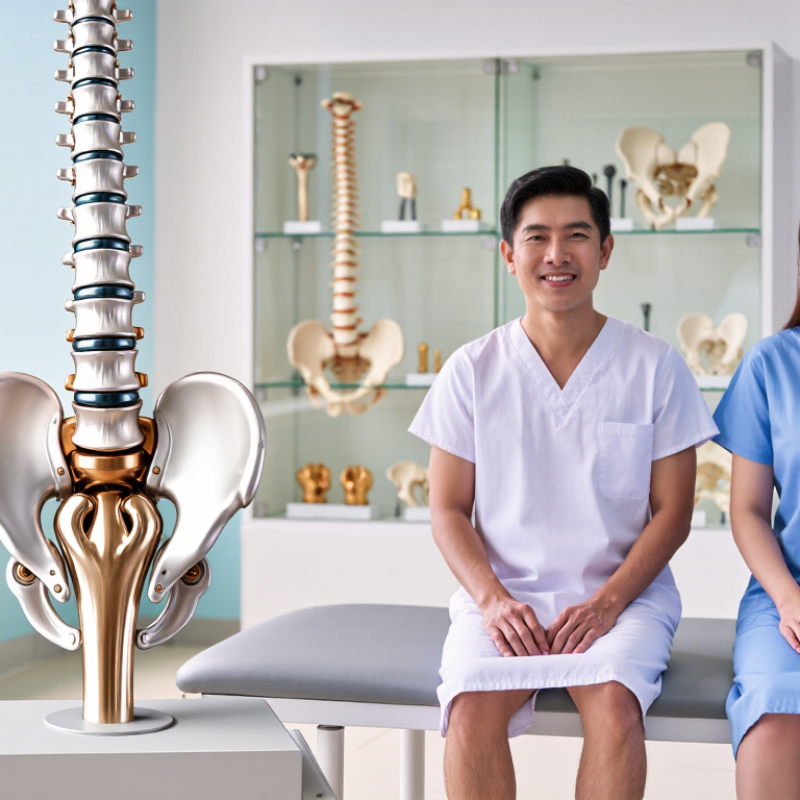
China Best Orthopedic Implants What Affects Their Lifespan?
China commonly manufactures joint replacement systems, trauma fixation devices, spinal implants, and sports medicine components. Joint products include artificial hips, knees, and shoulders. Trauma systems use plates, screws, nails, and wires for fractured bones. Spinal products include cages, rods, and pedicle screws. The category labels are not always clean. Some factories produce components, while others complete the entire implant system.
The China National Joint Replacement Registry reported more than one million primary hip and knee replacements in recent annual data. That volume supports broader clinical experience, but volume alone does not prove durability. A 2023 WHO report estimated that 1.71 billion people worldwide live with musculoskeletal conditions. Demand is substantial. Manufacturing quality still varies.
A 2024 market analysis by Grand View Research estimated the global orthopedic devices market at over 55 billion US dollars in 2023. Chinese production covers both standard implants and patient-specific designs. Common materials include titanium alloys, cobalt-chromium alloys, stainless steel, and medical-grade polymers. Surface roughness, coating adhesion, dimensional accuracy, and sterilization control affect clinical performance. So does surgical technique. Fit is personal. A strong implant can still fail when alignment, loading, or follow-up care is poor. I would also question unusually low prices, because published reports rarely reveal every quality-control cost.
China Best Orthopedic Implants: What Affects Their Lifespan?
Material choice strongly influences implant longevity. Titanium alloys offer high strength and lower weight. Cobalt-chromium alloys resist wear under heavy loading. Ceramic surfaces create very low friction, but they require precise manufacturing. Polyethylene liners also matter. Highly cross-linked polyethylene can reduce wear particles and delay loosening.
Design is equally important. Porous surfaces may encourage bone integration around uncemented implants. Tapered stems can improve initial stability when bone quality is suitable. However, a larger implant is not always better. Poor alignment, excessive stiffness, and unsuitable sizing can increase stress near the implant. No material is perfect. Surgical technique and patient activity remain significant variables.
A 2019 Lancet analysis of approximately 6.7 million hip and knee replacements reported 25-year survival of 58.7% for hip replacements and 77.6% for knee replacements. These figures combine many implant designs and healthcare systems, so they cannot predict one patient’s outcome. National registries, including the Australian Orthopaedic Association National Joint Replacement Registry, show that revision risk differs by fixation method, bearing surface, age, and procedure type.
Tips: Ask about the implant’s alloy, bearing surface, fixation method, and registry evidence. Confirm whether the design has long-term follow-up, not only laboratory results. Regular follow-up can detect loosening before pain becomes severe. Activity advice should be individualized, because “low impact” is not identical for every patient.
| Material or Design Factor | Typical Orthopedic Use | Key Properties | How It Can Affect Longevity | Important Limitations |
|---|---|---|---|---|
| Titanium and titanium alloys | Trauma plates, screws, spinal systems, intramedullary nails, and some joint components | High strength-to-weight ratio, strong corrosion resistance, and a relatively low elastic modulus compared with cobalt-chromium alloys | Lower stiffness can help reduce stress shielding in some fixation applications; corrosion resistance supports long-term tissue compatibility | Titanium is not generally preferred as a bearing surface against itself because adhesive wear and galling can occur |
| Cobalt-chromium alloys | Femoral components, fixation stems, and other high-load joint replacement parts | High hardness, excellent wear resistance, high strength, and good corrosion resistance | Can maintain geometry under high loads and resist surface damage, helping reduce wear-related failure in suitable applications | Higher stiffness may contribute to stress shielding; metal sensitivity and corrosion at modular junctions remain design considerations |
| 316L stainless steel | Temporary fracture fixation devices and selected surgical instruments | Good manufacturability, strength, and corrosion resistance when properly processed | Reliable for many temporary fixation applications when loads are controlled and the device is correctly positioned | Long-term performance can be affected by fatigue, surface damage, corrosion, and the biological environment; many fixation devices are not intended to remain permanently |
| Ultra-high-molecular-weight polyethylene | Acetabular liners and tibial inserts in joint replacement systems | Low friction, low density, and favorable shock-absorbing behavior | Lower wear rates in modern, highly cross-linked grades can reduce particle generation and the risk of osteolysis | Wear still depends on alignment, loading, surface finish, oxidation control, implant size, and activity level |
| Alumina and zirconia-based ceramics | Selected hip and knee bearing components | Very high hardness, chemical inertness, and low wear under appropriate conditions | Can substantially reduce bearing wear and particulate debris when surfaces remain well aligned and undamaged | Ceramics are brittle; edge loading, impact, defects, or improper assembly may cause chipping or fracture |
| PEEK and carbon-fiber-reinforced PEEK | Selected spinal cages, trauma components, and radiolucent implants | Radiolucency, relatively low elastic modulus, and resistance to many chemicals | Can facilitate imaging and provide a stiffness profile closer to bone than many metals; reinforcement improves strength and fatigue performance | Osseointegration may require surface modification or a porous structure; performance is highly dependent on implant geometry and load conditions |
| Porous or 3D-printed surfaces | Cementless joint components, spinal implants, and customized bone-contact surfaces | Interconnected pores can support bone ingrowth; geometry can be tailored to reduce stiffness | Biological fixation may improve implant stability and reduce dependence on cement or initial mechanical fixation alone | Porosity can reduce bulk fatigue strength; pore size, cleanliness, surface quality, and manufacturing consistency must be controlled |
| Surface finish and polishing | Articulating surfaces and modular connection areas | Smooth bearing surfaces reduce asperity contact; controlled textures can support fixation where intended | A smoother bearing surface generally reduces friction and wear; appropriate roughness at the bone interface can improve fixation | The ideal surface differs by location; excessive roughness at a bearing interface can accelerate wear |
| Fatigue-resistant geometry | Plates, screws, nails, spinal rods, and load-bearing joint components | Rounded transitions, adequate cross-section, and reduced stress concentrations | Better stress distribution can delay crack initiation and improve resistance to repeated loading | Even a well-designed implant may fail if overloaded, poorly positioned, damaged during surgery, or used before bone healing |
| Modular junction design | Modular hip, knee, shoulder, and revision systems | Allows intraoperative flexibility in sizing and alignment | Correct taper engagement and adequate stability can reduce micromotion, fretting, and mechanically assisted corrosion | Additional interfaces create potential sites for fretting, corrosion, wear debris, and assembly-related problems |
| Fixation method | Cemented or cementless joint replacement and fracture fixation | Mechanical interlock, bone ingrowth, or polymethylmethacrylate cement provides initial or long-term fixation | Stable fixation limits micromotion and helps prevent loosening, pain, and abnormal stress transfer | Bone quality, surgical technique, implant alignment, activity, and healing biology strongly influence fixation success |
| Patient and usage factors | All permanent and temporary orthopedic implants | Includes age, bone density, body weight, activity level, comorbidities, smoking, and adherence to rehabilitation | Lower-impact activity, healthy bone, good rehabilitation, and appropriate follow-up can reduce excessive loads and delayed healing | No material or design guarantees a fixed service life; individual outcomes vary substantially |
Note: Implant longevity is multifactorial. Material selection, geometry, surface engineering, fixation, surgical technique, patient biology, activity, and follow-up care all contribute to clinical performance. Service-life estimates should be based on device-specific clinical evidence rather than material type alone.
China Best Orthopedic Implants: What Affects Their Lifespan?
An implant’s service life depends on more than material quality. Surgical technique strongly influences early stability, alignment, and tissue recovery. During hip or knee replacement, accurate bone preparation helps the implant seat firmly. Poor alignment can create uneven loads, pain, and accelerated wear. Infection prevention also matters. Sterile handling, careful wound closure, and timely treatment of complications reduce avoidable damage. These details require trained surgeons, validated protocols, and regular follow-up.
Patient factors continue after discharge. Body weight, bone density, activity level, and chronic disease can change mechanical stress. Repeated heavy lifting may overload a joint implant. Smoking can delay healing, while uncontrolled diabetes may increase infection risks. Safe movement, rehabilitation, and prescribed exercises support muscle strength and joint control. Follow-up imaging can detect loosening or wear before symptoms become severe. Still, no lifespan estimate is exact. Biology is unpredictable, and excellent surgery can still face unexpected problems.
Tips: Ask about surgical experience, implant fixation, activity limits, and follow-up schedules. Keep the wound clean and report fever, drainage, or increasing pain promptly. Maintain a healthy weight and follow rehabilitation instructions. Do not ignore new clicking or instability. Small warning signs matter. Patients should share medication changes and health conditions before surgery. These habits cannot guarantee permanence, but they may improve durable function.
An orthopedic implant does not maintain itself after surgery. Its long-term performance depends on bone healing, daily loading, body weight, and medical follow-up. In clinical care, patients sometimes delay reviews because the joint feels normal. That confidence can be misleading. Routine appointments allow a surgeon to assess movement, pain, alignment, and imaging changes before damage becomes obvious. Follow the individualized schedule, even when recovery seems complete.
Gentle exercise, prescribed strengthening, and weight control can reduce unnecessary stress around an implant. Avoid sudden high-impact activity unless your orthopedic team approves it. Keep wounds and skin clean, and report persistent drainage, warmth, or swelling. Dental or other invasive procedures may require specific advice, especially for patients with complex medical histories. Do not change medicines or rehabilitation plans without professional guidance. Small details matter.
Early warning signs include new or increasing pain, instability, clicking with weakness, reduced motion, or a change in limb length. Fever, redness, drainage, or rapidly increasing swelling needs prompt medical attention. A single painless click is not automatically implant failure, but repeated symptoms deserve evaluation. Imaging and physical examination are more reliable than online comparisons or guesswork. Perfect maintenance is unrealistic; missed exercises or late appointments happen. Report changes honestly and return to care early.
China Best Orthopedic Implants: What Affects Their Lifespan?
Durability should be compared through consistent test methods, not marketing claims. ISO 7206-4 evaluates hip stem fatigue under repeated loading. ISO 14243 measures knee replacement wear in controlled simulator tests. These tests reveal material performance, but they cannot reproduce every patient’s gait, weight, or bone quality.
Clinical registries provide stronger evidence. The Australian Orthopaedic Association National Joint Replacement Registry’s 2024 report shows that revision risk varies by implant design, fixation method, age, and surgical indication. In many primary hip procedures, cumulative revision remains near single digits at ten years, but younger and highly active patients often face greater lifetime risk. The UK National Joint Registry also compares revision outcomes across large patient populations, supporting longer follow-up over short laboratory claims.
In practical comparisons, request fatigue data, wear rates, surface characterization, sterilization records, and traceable clinical follow-up. Check whether testing follows ISO or ASTM protocols. Examine confidence intervals, not only average results. A lower wear rate sounds impressive. It may not predict better fixation.
My experience is that surgeons also notice small details: a rough taper, unclear packaging, or inconsistent instrument fit. These findings deserve investigation, not assumptions. Chinese implants should be judged by equivalent standards, transparent data, and independent follow-up. Laboratory evidence matters. Patient evidence matters more.
The chart shows commonly referenced cyclic-testing endpoints used in international orthopedic implant standards. Hip and knee replacement components are evaluated under millions of simulated walking cycles, while spinal fixation constructs are tested under repeated mechanical loading. These laboratory cycles are comparison benchmarks rather than guaranteed clinical lifespans. Actual durability also depends on material properties, implant design, manufacturing quality, surface finish, surgical positioning, patient activity, bone quality, infection risk, and long-term wear or loosening.
Reference framework: ISO 7206 for hip-joint prostheses, ISO 14243 for knee-joint prostheses, and ASTM F1717 for spinal implant constructs. Testing requirements and product-specific protocols may differ by implant type and applicable regulatory jurisdiction.
Common products include hip, knee, and shoulder replacements. Other devices include plates, screws, nails, wires, spinal cages, rods, and pedicle screws.
Materials include titanium alloys, cobalt-chromium alloys, stainless steel, and medical-grade polymers. Surface finish and dimensional accuracy also matter.
No. Large production volumes may support clinical experience, but they do not guarantee durability. Quality can still vary between manufacturers.
Bone healing, body weight, activity level, alignment, fixation, surgical technique, and follow-up care all influence lifespan. Fit is personal.
Compare standardized fatigue tests, wear rates, surface data, sterilization records, and traceable clinical follow-up. Marketing claims are not enough.
No. Laboratory tests use controlled loading and wear conditions. They cannot fully reproduce gait, bone quality, weight, or daily activity.
Attend scheduled reviews, even when recovery feels complete. Gentle exercise, prescribed strengthening, and weight control may reduce unnecessary stress.
New pain, instability, weakness, reduced motion, repeated clicking, or altered limb length deserves medical evaluation. Fever, drainage, warmth, and rapid swelling need prompt attention.
Not always. A single painless click may be harmless, but repeated clicking with weakness or pain should be assessed.
Request testing protocols, confidence intervals, wear results, coating data, sterilization records, and long-term clinical evidence. Unusually low prices deserve careful questions.
Orthopedic implants made in China include joint replacement components, bone plates, screws, spinal devices, and trauma fixation systems. What affects the lifespan of orthopedic implants includes the choice of material, surface treatment, implant geometry, load distribution, and resistance to corrosion, wear, and fatigue. High-quality design should balance strength, compatibility with human tissue, and long-term stability while matching the patient’s anatomy and activity level.
Surgical accuracy is equally important, since correct positioning, secure fixation, sterile procedures, and appropriate rehabilitation can reduce complications and unnecessary stress on the implant. Patient age, bone quality, weight, health conditions, activity, and adherence to medical advice also influence durability. Regular follow-up appointments, imaging, and monitoring for pain, swelling, instability, reduced movement, or unusual sounds can help identify early failure. When comparing durability, buyers and healthcare professionals should consider material testing, fatigue resistance, manufacturing consistency, clinical evidence, quality control, and compliance with applicable medical standards rather than relying on price alone.
