Sete Orthopedic Implants
Sete Orthopedic Implants
Sete Orthopedic Implants
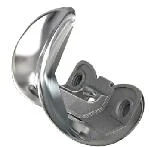
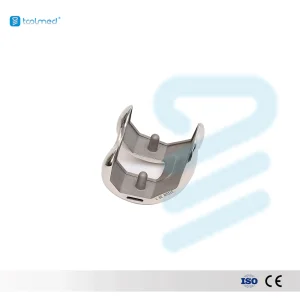
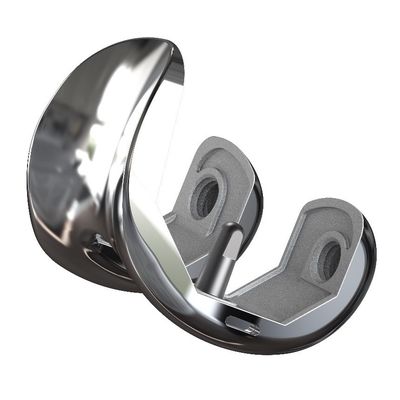
The Total Knee System Posterior Stabilized (PS) has emerged as a gold standard in orthopedic surgery, particularly for patients with compromised posterior cruciate ligaments (PCL). Unlike Cruciate Retaining (CR) systems, the PS design incorporates a cam-and-post mechanism that mimics the natural stability of the knee. Globally, the demand for high-precision PS systems is surging due to an aging population and the increasing prevalence of degenerative joint diseases.
Current industrial trends indicate a shift toward personalized medicine. Manufacturers are now integrating AI-driven surgical planning and 3D-printed femoral components to ensure a perfect anatomical fit. As a leading factory and exporter, we are at the forefront of this technological revolution, combining biomechanical engineering with surgical efficiency.
Shanghai Sete Technology Co., Ltd. represents the peak of Chinese medical manufacturing. With over 30 years of experience, we have built a complete supply chain that allows for competitive pricing without compromising on material quality. We utilize medical-grade Cobalt-Chromium (CoCr) alloys and UHMWPE inserts that meet or exceed international standards like ISO 13485 and CE.
Global procurers from Europe, Southeast Asia, and Latin America are increasingly looking toward China for OEM/ODM solutions. Our factory capability ensures that high-volume orders for Total Knee Systems are fulfilled with consistent quality, precise tolerances, and rapid turnaround times.
Based on a complete supply chain system, we provide customers with a full range of orthopedic product series and solutions. Over 30 Years Experience of supplying the orthopedic product. We have enough resources to meet your needs for OEM and ODM.
Years Experience
Exporting Countries
Certified Quality
Fast Response
In developed markets like the USA and Germany, the focus is on Post-Operative Recovery Speed. Our Posterior Stabilized systems are designed for high-flexion, allowing patients to regain mobility faster. For developing markets, the emphasis is on Cost-Effectiveness and Durability, where our implants provide a 20+ year lifespan at a fraction of the cost of western brands.
The Posterior Stabilized (PS) design is specifically engineered to handle the "roll-back" mechanism during knee flexion. By utilizing a high-molecular-weight polyethylene (UHMWPE) post and a metal femoral cam, the system ensures that the femur does not slide too far forward on the tibia. This is critical for patients whose PCL is either removed or significantly damaged by arthritis.
Our manufacturing process involves Vacuum Melting of alloys to prevent impurities, followed by 5-axis CNC Machining to ensure every curve of the condyle matches the human anatomy. Each batch undergoes rigorous fatigue testing—simulating millions of cycles—to guarantee long-term performance in the human body.